
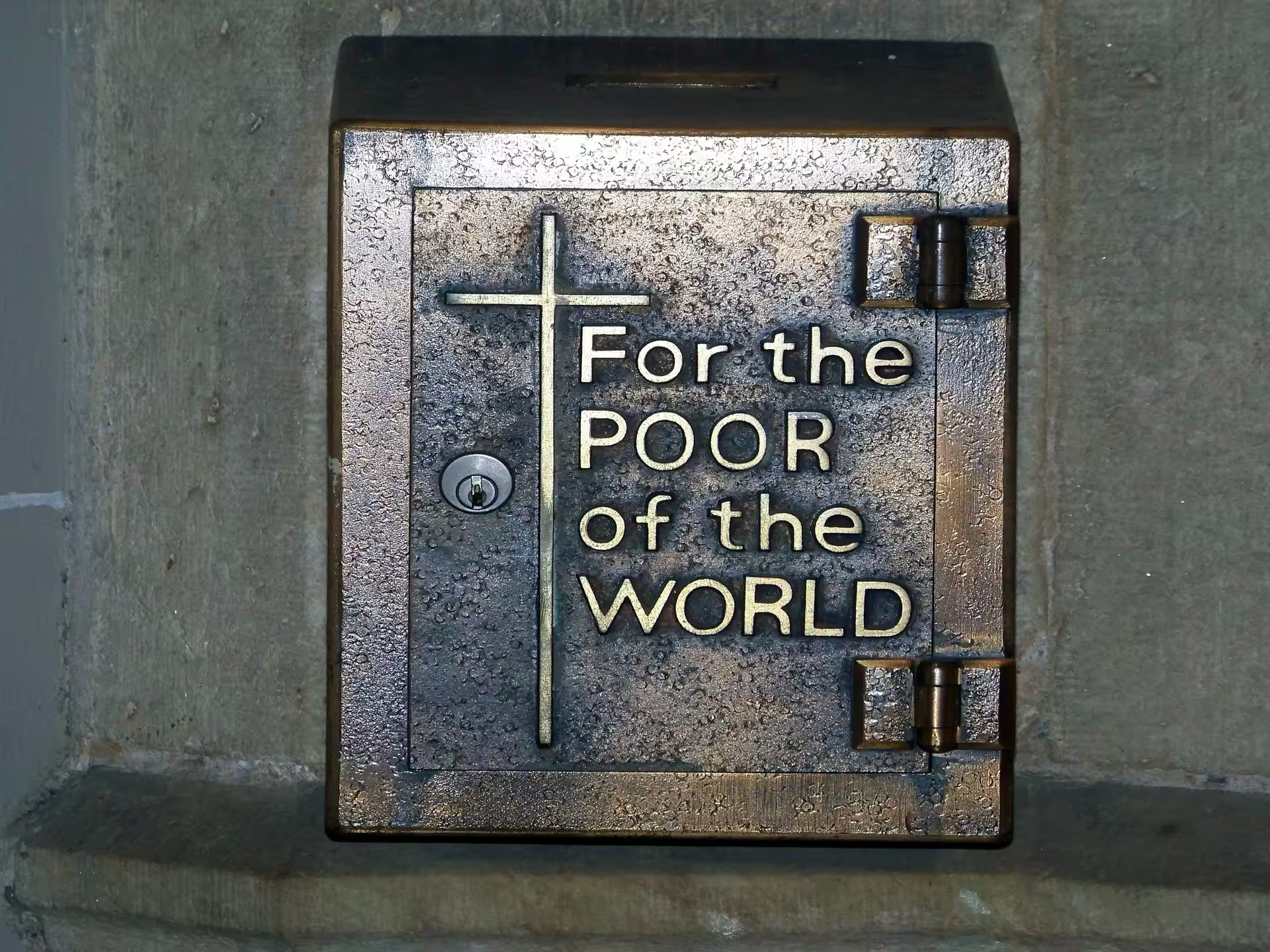
One thing most everyone agrees on is that it’s good to give to the poor by helping out the needy and those who are less fortunate than ourselves. Even the most wretched of sinners sees the value in either helping someone worse off than they are or being helped by someone who is doing better than themselves.
The desire to relieve the suffering of others is certainly a very much in line with Christian teachings found in the Bible. While this desire does indeed reflect the heart of God, it is far from unique to those who follow Jesus.
The whole world understands that charity, giving to the unfortunate, is a good thing. Nearly every religion in the world understands this and promotes helping others in one form or another.
It is probably safe to say that recognizing the virtue in charitable giving is nearly universal. Even those who don’t actually do anything to help others in any practical sense understand that generosity is virtuous. But here’s the thing we need to remember.
God doesn’t just want us to give. He cares about how we give, because our generosity flows from our hearts and therefore flows from our relationship with Him.
Charity is Biblical
The Bible exhorts us to help those less fortunate than ourselves, and it’s not just a suggestion. It’s a clear call to action which reflects God’s character through us.
For example, in Proverbs, we see warnings about oppressing those who are at a disadvantage because God Himself stands up for them,
Do not rob the poor because he is poor,
— Proverbs 22:22-23 (NKJV)
Nor oppress the afflicted at the gate;
For the LORD will plead their cause,
And plunder the soul of those who plunder them.
This verse reminds us that God is the defender of the vulnerable. When we ignore or harm them, we’re stepping against His ways.
Another passage drives this home even more,
He who oppresses the poor reproaches his Maker,
— Proverbs 14:31 (NKJV)
But he who honors Him has mercy on the needy.
Think about it this way. Being merciful isn’t just nice. It directly honors God. In my own life, I’ve seen how helping others shifts my focus from my own worries to God’s bigger picture. The more I genuinely care about other people, the more compassionate my heart becomes. This process changes how I see the world around me.
To make this practical, here are a few ways we can live this out:
- Look for opportunities in your community, like supporting a local food bank or helping a neighbor in need.
- Pray for wisdom before you give, so it’s not just a quick fix but a genuine expression of God’s love.
- Remember, even small acts of kindness count. A kind word with a helping hand can go a long way.
God’s Promise to Believers
Did you know that God has a very specific promise for those who help others who are in poverty and need assistance? Proverbs says that being kind to poor people is in reality the same thing as making a loan to God.
He who has pity on the poor lends to the LORD,
— Proverbs 19:17 (NKJV)
And He will pay back what he has given.
This is a promise you can take to the bank. Literally.
How would you like to have an IOU from God? Anytime you express compassion for someone less fortunate or help out someone who needs a hand, that’s exactly what’s happening.
God says you’ve made a loan to Him through your generosity. This verse also says God will repay that loan. God might even pay interest, though this passage doesn’t say so.
Regardless, God promises to give back to you everything you’ve given to those in need.
Giving Alms
The King James Version of the Bible calls this kind of giving, “alms.” We give alms out of compassion to meet a need someone has. Other translations call it “charitable deeds,” “good works,” or “good deeds.” I prefer the word “alms” for this because it is more specific.
When we truly believe God will keep this promise to return everything we give to help those less fortunate, it removes fear of lack as an excuse not to give. Think about it.
When we we are confident God will keep His promise and just give it back to us, why not be generous when we feel compassion about a particular need?
Lisa and I have experienced this in our lives a number of times. For example, in the very early days of COVID when all the experts were telling us things were going to get far worse than they eventually did, we wanted to do something to help. So we gave, what was for us a large amount of money to a medical ministry.
About 3-1/2 weeks later someone gave us the same exact large amount of money. God kept His Proverbs 19:17 promise to us.
Another time we were looking to give a donation to help some missionaries with a particular need. Lisa was thinking about giving a larger amount than I had in mind. When I heard her number, I said, “Why not. God will just give it back to us anyway.”
Before I could finish making the donation to the missionary’s website, a donation came into our ministry for the exact same larger amount. God keeps His promises.
Mistaking Alms for Seed
There can be a challenge, however, when believers don’t clearly understand God’s promises.
As we’ve seen, God promises to return whatever we give to help those in need, meaning whenever we give alms. That’s a one-for-one return.
Elsewhere the Bible reveals the universal principle of planting and harvesting. Paul states this principle of sowing and reaping as a universal law, much like the law of gravity.
Do not be deceived, God is not mocked; for whatever a man sows, that he will also reap.
— Galatians 6:7 (NKJV)
Then Jesus spoke of a thirty, sixty, and even hundredfold harvest which we can receive when seed is sown.
But he who received seed on the good ground is he who hears the word and understands it, who indeed bears fruit and produces: some a hundredfold, some sixty, some thirty.”
— Matthew 13:23 (NKJV)
Where it goes sideways is when people give out of compassion to meet a need but think they are sowing seed. They are looking for big multiples of return on what they gave when God only promises a one-for-one return on that kind of giving.
This error sets them up for disappointment because they have a false expectation of what God promises to them.
Then they often also run into the next problem…
Jesus Said to Give in Secret
Jesus added a caveat to God’s promise to pay back whatever we give to others out of compassion to meet their need.
Take heed that ye do not your alms before men, to be seen of them: otherwise ye have no reward of your Father which is in heaven.
— Matthew 6:1 (KJV)
It’s important that we don’t talk specifics about what we give to the poor to alleviate their suffering. If we do talk about it then, according to Jesus, we will have no reward form God.
When we make it a point to talk about it to make ourselves look good we nullify God’s promise to repay what we gave away.
This admonition to not talk about our almsgiving is all about protecting hearts. First, it protects the heart of the one receiving what we gave. God is love. He will never humiliate someone in order to bless them.
Therefore, in order for us to be in line with God’s heart when it comes to blessing those in need who, we do well to avoid potentially humiliating them by talking about what we did for them.
This also protects our own heart by encouraging us to stay humble and trust God for recognition instead of building ourselves up in other people’s eyes.
The attitude of our heart matters to God.
We see this in what Jesus says just a few short verses later,
But when you do a charitable deed, do not let your left hand know what your right hand is doing, that your charitable deed may be in secret; and your Father who sees in secret will Himself reward you openly.
— Matthew 6:3-4 (NKJV)
This teaches us that giving in secret when we help others who may be experiencing challenges in life keeps our hearts pure. It’s about honoring God, not seeking applause.
To apply this:
- Give anonymously when you can, like dropping off help without fanfare.
- Check your motives. Before you give, ask yourself if you’re doing it for God’s eyes or for others’ approval.
- Expect God’s reward. God promises to repay. Believe Him to keep His word.
Some Giving Can Be Talked About
What about our giving to organizations instead of individuals?
When it comes to giving to the poor, it often depends on the function of the ministry or organization you’re supporting. As we’ve seen, not all of our giving is in the same category tied to the same promise of God. Understanding this helps us be wise stewards.
Some ministries focus on immediate relief, like feeding programs, while others build long-term change, such as teaching job skills or sharing the Gospel.
In the Bible, we see Jesus and the early church giving in ways that met both needs:
- Immediate help, as in Acts 4:34-35, where believers sold possessions to support each other.
- Long-term impact, like teaching and discipling, which lifts people out of ongoing poverty.
If you’re giving to a ministry, consider its role. Is it just handing out aid? Or is it pointing people to Jesus? In my experience, the most effective giving combines compassion with the message of the Kingdom.
Here’s a simple way to think about it:
- Evaluate the ministry: Ask how they use funds and if they share the Gospel alongside aid.
- Align your giving: If a ministry focuses on relief, consider it alms. If the ministry is more about discipleship, then maybe treat it as seed you’re planting..
- Balance your efforts. Don’t just give money. Also give of your time or skills too. Serving others directly is a powerful way to share the love of God with your world.
Practical Tips for Giving with Purpose
To wrap this up, let’s get practical. How can you make your giving matter more to God in everyday life?
Start by renewing your mind with the promises God makes to you in the Bible. Then get into action.
- Pray first. Before you give, ask God for direction so your giving aligns with His heart.
- Give generously but wisely. Look for ways to help which build relationships, not just hand out resources.
- Track your growth. Keep a journal of your giving experiences and how God rewards them. It’ll encourage you to keep going as you start to connect God’s promises with the direct results when He keeps His word to you.
In the end, how you give isn’t just about the poor; it’s about drawing closer to God and living out His Kingdom here on earth. Let’s commit to giving in ways that honor Him and change lives.
Once you start to see God’s promises work in your life, giving starts to become fun. It’s exciting to see how God chooses to pay back the debt He says He owes us when we give generously to those in need.
He who has pity on the poor lends to the Lord,
— Proverbs 19:17 (NKJV)
and He will pay back what he has given.
Frequently Asked Questions About Giving to the Poor
We would Like to Give You
a FREE Gift Now!
Sign up to receive our Daily Reflections
email devotional each day
as a complimentary gift!